Why the next phase of solar could be a big opportunity for women
There is plenty to talk about in the latest SRES and PDRS changes if you work in solar. But as Australia’s leading community group for women in solar, we’re interested in what could this mean for the women building careers in Australia’s energy industry.
From 1 October 2026, the Federal Government is expanding the Small-scale Renewable Energy Scheme (SRES), increasing the eligibility threshold for upfront STC incentives from 100kW to 1MW. That brings a much larger part of the commercial solar market into the scheme that has helped drive Australia’s world-leading rooftop solar uptake.
For businesses, it means lower upfront costs and a stronger business case for solar. For the industry, it means a much bigger pipeline of commercial projects to design, sell, connect and build.
That’s good news for women already working in residential solar who might be thinking about their next move.
C&I solar is a natural progression for many of the skills developed in residential. Sales, project management, design, customer relationships, procurement, compliance and operations all translate. The difference is that the projects get bigger, the stakeholders multiply and the problems become more complex - and many would say more exciting.
That creates opportunities to move into bigger project delivery, commercial sales, engineering, energy modelling, construction, finance, asset management and leadership without having to leave the solar industry behind.
And it isn't only people working directly for solar companies who should be paying attention.
The Federal Government has also flagged work to improve the speed and efficiency of C&I solar connection applications through the electricity networks. Connection delays have been a significant barrier to getting larger rooftop projects moving, so anyone working in DNSPs, network engineering, grid connections, approvals or compliance could find themselves increasingly important as the commercial pipeline grows.
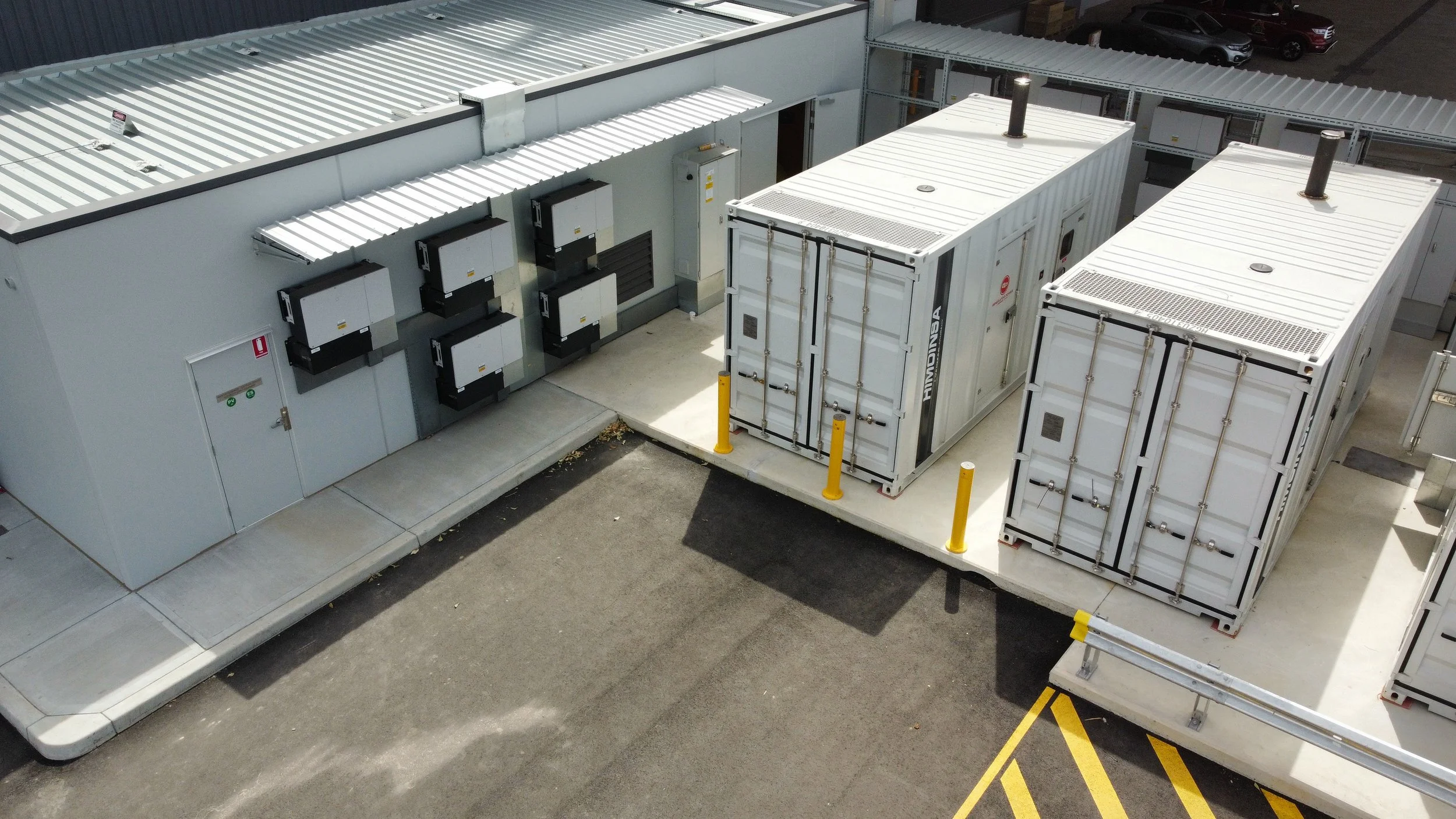
Commercial battery storage is set to boom with PDRS changes
What about battery storage?
From 1 September 2026, NSW’s Peak Demand Reduction Scheme will introduce new incentives for commercial batteries, covering systems from 20kWh through to 30MWh, in the shape of BESS3, BESS4 and BESS5 activities.
That is another significant shift for an industry that has traditionally been dominated by solar PV. As batteries become more commercially viable, opportunities will grow around battery design, controls, energy optimisation, demand management, trading, project finance and ongoing asset management.
And there is a bigger point here for women in the industry.
These policies aren't specifically designed to create jobs for women, and we shouldn't pretend they are. But they are expanding the size and complexity of the energy market, at a time when Australia needs more people with the skills to build and manage it.
For women who have established themselves in residential solar, this could be a moment to look sideways and upwards.
How can women in solar get ready for C&I roles?
The good news is, you don’t need to go back to uni, and nor do you need to become an electrician. In most cases, the fastest path is to add one or two targeted credentials to the skills you already have.
Here are a few to consider in project management, supplier management, procurement and more - and some for the electricians among us.
Accessible starting points, no electrical licence required
UEERE0054 Conduct site survey for grid-connected PV and battery storage systems: https://training.gov.au/Training/Details/UEERE0054
TRaCE Microcredentials (UNSW / University of Newcastle): https://trace.org.au/microcredentials/
AIM Microcredential in Project Management Planning: https://www.aim.com.au/project-management/courses/microcredential-in-project-management-planning
AIM Business School Microcredential in Project Management: https://www.aimbusinessschool.edu.au/abs-courses/microcredential-in-project-management
UNSW Canberra stackable microcredentials (includes procurement and supplier management): https://www.unsw.edu.au/canberra/study-with-us/microcredentials
CIPS Australia and New Zealand (procurement qualifications, entry-level upward): https://www.cips.org/regional/australia-new-zealand
Governance Institute of Australia micro-credentials: https://www.governanceinstitute.com.au/education/micro-credentials/
Require an electrical licence or other trade prerequisite
UEERE0060 Design grid-connected battery storage systems: https://training.gov.au/Training/Details/UEERE0060
UEERE0077 Install battery storage equipment power conversion equipment to grid: https://training.gov.au/Training/Details/UEERE0077
UEERE0078 Install battery storage to power conversion equipment: https://training.gov.au/Training/Details/UEERE0078
UEERE0061 Design grid-connected photovoltaic power supply systems: https://training.gov.au/training/details/UEERE0061