AWISE’s Fiji Mission: SEIAPI, Women’s Workshop & the Ratu Naivalu Microgrid
Last month, AWISE board members Lily Pejkic and Lauren Hamilton travelled to Fiji courtesy of It’s Time Foundation and the Sustainable Energy Industry Association of the Pacific Islands to attend the inaugural SEIAPI conference and participate in a series of women’s leadership and capacity-building activities connected to one of the Pacific’s most inspiring renewable energy projects to date.
On Waya Island, an all-female team of solar technicians, engineers and University of the South Pacific students came together to deliver a standalone solar and battery microgrid system for Ratu Naivalu Memorial School, helping provide reliable electricity and internet connectivity to a remote island community. Lily worked with the team during the last two days of the project’s delivery, offering her experience where the team needed it.
The project itself was a remarkable achievement, and life-changing for the kids, teachers and parents at the school, but what made the experience especially significant was the broader conversation surrounding it. Across the week, women from Fiji, Tonga and Australia shared experiences of working within the renewable energy sector, discussing both the opportunities emerging across the industry and the barriers that still exist when it comes to participation in technical and leadership roles.
Again and again, the same themes surfaced. Access to childcare. Access to mentorship. Access to field experience. Access to opportunities that build confidence and long-term career pathways.
What became clear very quickly is that capability is not the issue. The technical skills, intelligence and commitment already exist in abundance. What is often missing is the opportunity to apply those skills in environments where women are trusted to lead meaningful work, and able to logistically juggle doing the work they love with caring duties in the home.
That is part of what made the Ratu Naivalu School project feel so important.
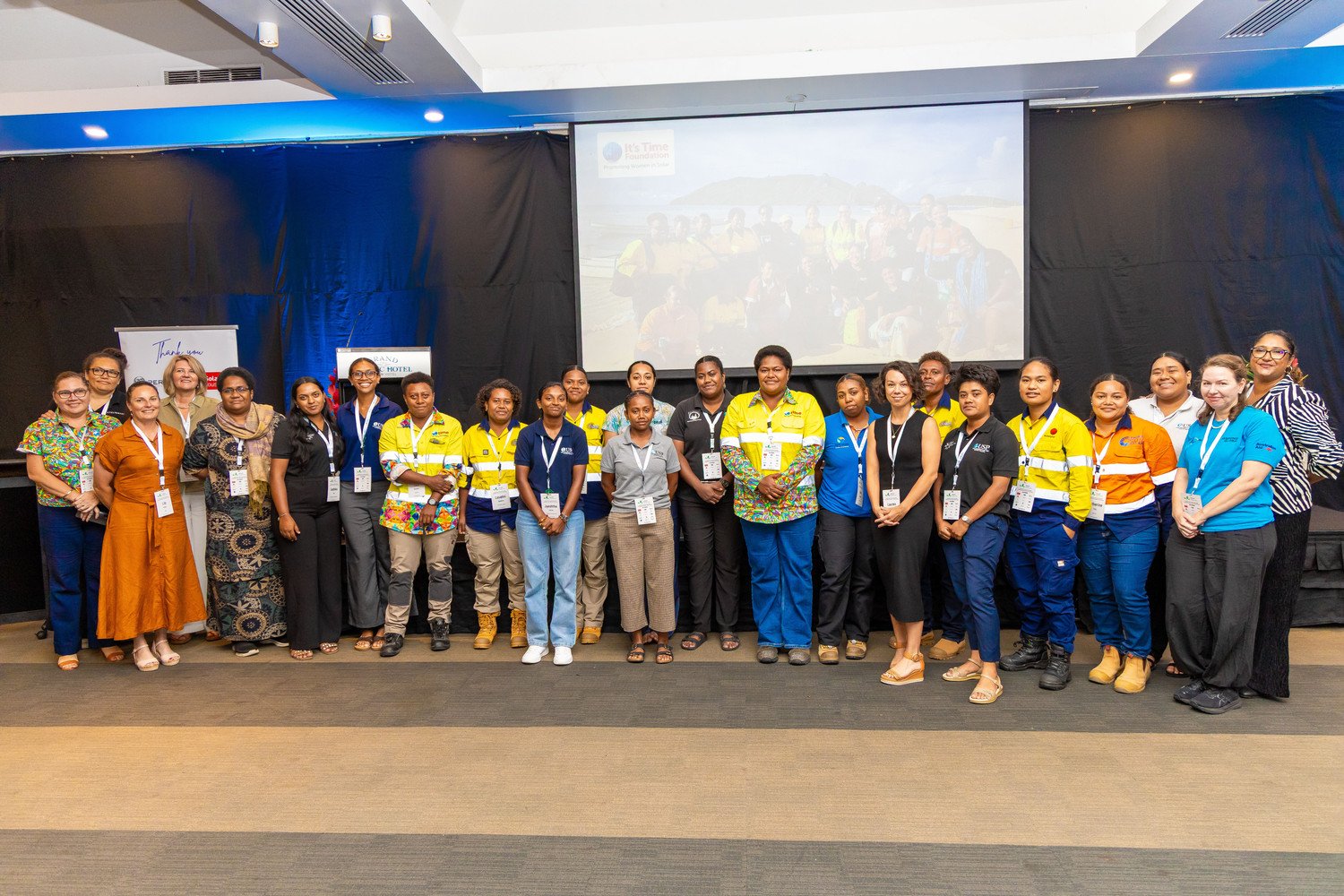
This was not a symbolic initiative designed simply to create visibility. Women were actively involved in designing systems, solving technical challenges, carrying out installations and collaborating under real project conditions to deliver infrastructure that will continue benefiting the school community for years to come.
The experience also highlighted the importance of connection and community within the renewable energy industry. Over the course of the week, strong professional and personal networks formed between women from different countries and backgrounds, creating a sense of shared experience that extended far beyond the project itself.
These kinds of relationships matter. In industries where women can still find themselves isolated within workplaces or technical environments, the opportunity to connect with others facing similar challenges can have a lasting impact on confidence, retention and career progression.
The discussions throughout the conference also reinforced that while every region faces different cultural and structural challenges, many of the experiences shared by women across the Pacific and Australia remain strikingly familiar. Conversations around visibility, credibility, leadership and inclusion continue to shape the experience of women working across renewable energy regardless of geography.
For AWISE, the trip reinforced the importance of creating pathways that support women not only to enter the industry, but to actively participate in shaping its future.
Projects like this remind us why we got into working in clean energy in the first place. They demonstrate what becomes possible when women are given the opportunity to lead, collaborate and contribute their skills in practical, meaningful ways. The clean energy transition is not only about technology. It is also about people, communities and ensuring the future of the industry is one that more people can genuinely see themselves being part of.